Celebrating Dr Wayne Te Kaawa’s new book on Jesus, whenua, whakapapa, and identity

Celebrating Dr Wayne Te Kaawa’s new book on Jesus, whenua, whakapapa, and identity

A major new contribution to Māori theology and contextual biblical interpretation, published by Bloomsbury T&T Clark.

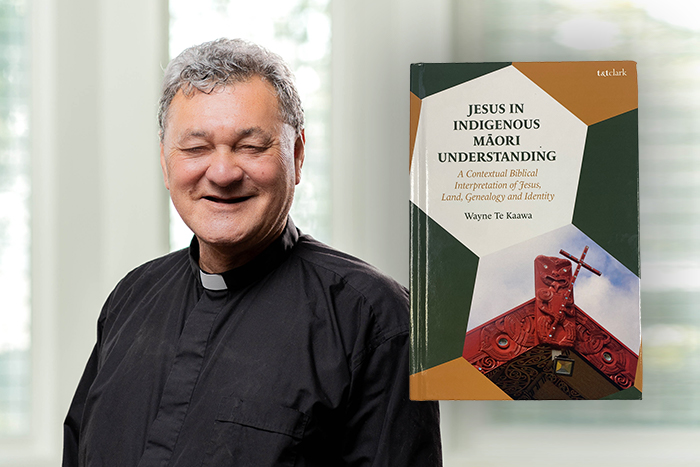
We are delighted to celebrate the publication of Jesus in Indigenous Māori Understanding: A Contextual Biblical Interpretation of Jesus, Land, Genealogy, and Identity, a new book by Revd Dr Wayne Te Kaawa, Kaiwhakaako Matua, Senior Lecturer at St Johns Theological College.

Wayne is a leading voice in the conversation between te ao Māori and Christianity, and this book reflects years of deep research and teaching. He completed his PhD in Theology at the University of Otago (2020), lectured in Māori Theology there from 2020 to 2024, and now brings that expertise into his work with our community at Hoani Tapu St Johns.

What the book explores

In Jesus in Indigenous Māori Understanding, Wayne offers a richly contextual Christology shaped by mātauranga Māori, engaging Jesus through the lenses of whenua, whakapapa, and identity.

A core thread of the book is Wayne’s exploration of Māori theological reflection within the framework of Atua, Whenua, and Tangata, with whakapapa as the binding thread and pinnacle of knowledge.

As Wayne shares in the video below, one key focus is listening to how Māori theologians describe who Jesus Christ is, and then applying whakapapa as a way of reading the genealogies of Jesus in the Gospels of Matthew and Luke. The result is a thoughtful, grounded study that invites both Māori and non-Māori readers into an Indigenous way of seeing Jesus, and into a wider conversation about how Christianity has treated Indigenous peoples globally.

Watch Wayne introduce the book
Availability

The book is published by Bloomsbury T&T Clark and available now in hardback and ebook. A paperback edition will be released later in the year.
Indigenising Anglican Theological Education

Indigenising Anglican Theological Education

Excerpted from Anglican Community News Service


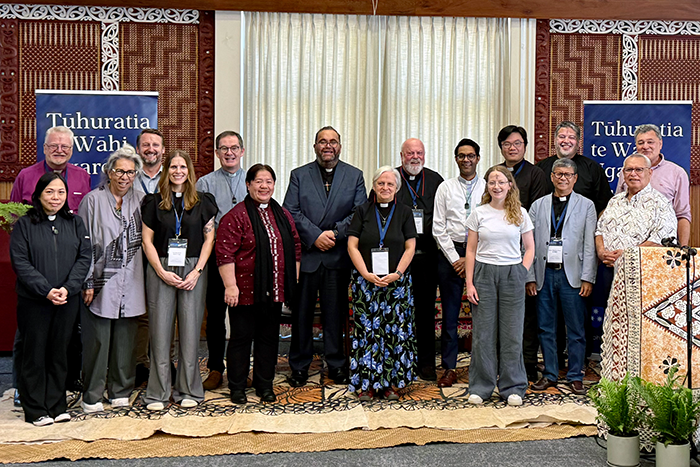
St John’s Theological College in Auckland hosted a landmark gathering of Anglican Seminary Deans from East Asia and Oceania to explore ways to reshape theological education through an indigenous lens.

From 2–4 March 2025, the Anglican Seminary Deans Network convened at St John’s Theological College in Auckland for its bi-annual in-person meeting. The gathering brought together college principals, deans, and directors of theological education from across East Asia and Oceania—including Hong Kong, Taiwan, the Philippines, Papua New Guinea, the Solomon Islands, Australia, Aotearoa New Zealand, and Polynesia—alongside representatives from the Episcopal Church, USPG, and the Anglican Communion Office.

The setting of St John’s College provided an inspiring model of what this vision could look like. With Māorileadership at the helm, a significant proportion of indigenous students, and a culture deeply embedded in Māori identity, the college embodies many of the principles discussed throughout the meeting. Participants were welcomed with a ‘Powhiri’ (a traditional Māori welcome) and worship was conducted in both Māori and English.

Hosted by The Reverend Dr Hirini Kaa, the Principal of St John’s College, the meeting was centred on the theme ‘Indigenising Anglican Theological Education’. Participants explored how theological curricula, pedagogy and institutional life could be refashioned to allow the outlook and culture of indigenous peoples across the Anglican Communion to shape theological education.

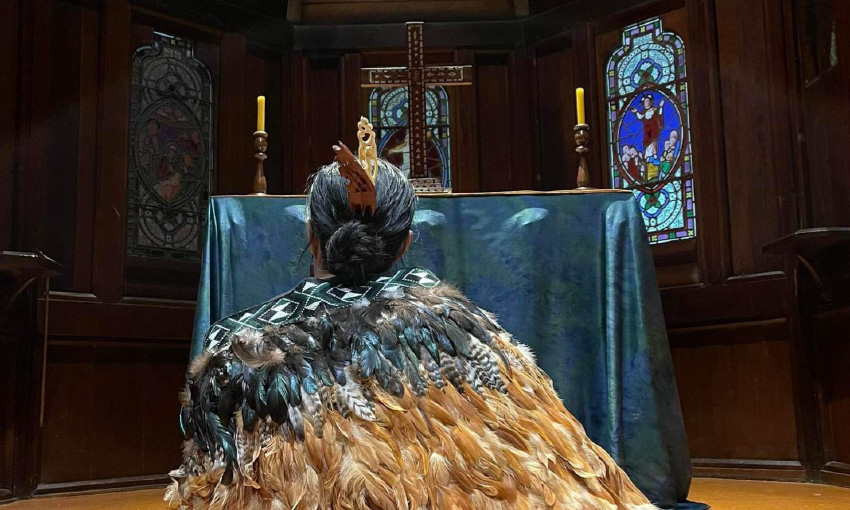
Clothed in my Korowai

Clothed in my Korowai

A project from former Hoani Tapu student Koriniti Mckillop.

Just sitting and being before the altar.

A feeling I really miss these days, just being before the Lord clothed in my
korowai, sitting in the posture I was taught in Kapa Haka (women sit with
legs sideways).”

Bishop Te Kitohi Pikaahu approved a request by Koriniti to wear her
Korowai, rather than the alb, at her commissioning to become a Kaikarakia
for Te Haahi Mihinare. Koriniti tells her story of the significance of the
Korowai.

“This Korowai was blessed by my father Rev. Canon Arthur Hokianga when
I was licensed as Kaikarakia in Te Amorangi ki te Tai Tokerau. Ko Hūmārie
te ingoa o tenei kākahu. A beautiful reminder to serve with humility and
love whenever and wherever I lead karakia.

I believe that wearing a Korowai is the most honourable way for me to
present myself before the Church and God as Mihingare and Tangata
Whenua.

Bishop Whakahuihui Vercoe said in his Waitangi speech in 1990, ‘We
(Maori) have been marginalised since 1840, and we continue to be
marginalised…’

I would like to honour my Tupuna and those before them by
acknowledging our own kakahu whakahirahira/Kakahu Maori as a small
gesture of my heritage.”


View the project >>
Anglican Journal of Theology in Aotearoa and Oceania

Anglican Journal of Theology in Aotearoa and Oceania

From 2022 to 2025, Hoani Tapu was proud to launch and grow the The Anglican Journal of Theology in Aotearoa and Oceania, a publication born out of our commitment to fostering deep theological engagement across the region.

Rooted in the kaupapa of Te Piri Poho, the journal exists to cultivate a network of intellectual discipleship – drawing together theologians and scholars working broadly within the Anglican tradition. It provides a platform for research and resources that serve God and the mission of the church in Aotearoa and the Pacific.

Anglicans Share Climate Solutions

Anglicans Share Climate Solutions

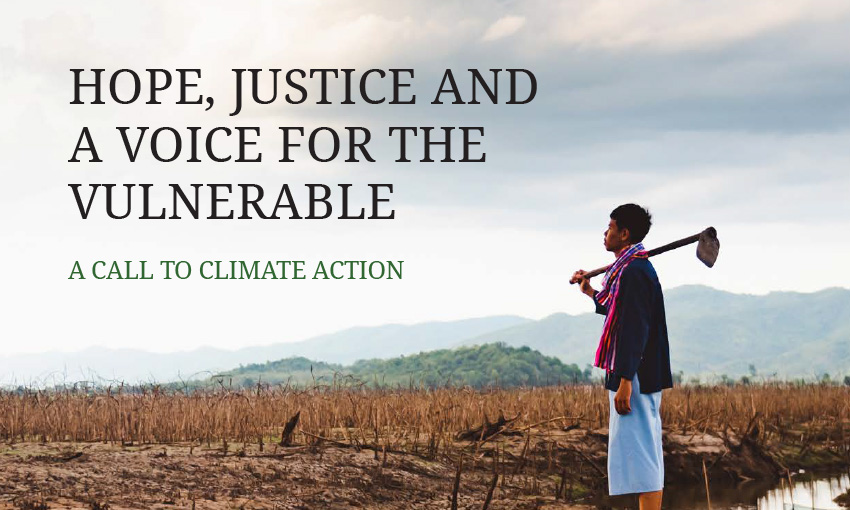
As the climate crisis intensifies, voices from across the Anglican Communion are rising to meet the challenge with faith-rooted action. Leaders are sharing Indigenous perspectives and practical responses to climate change, reminding us that care for the earth is both a theological imperative and a moral responsibility. Rooted in whakapapa and guided by the concept of kaitiakitanga (guardianship), the author’s contributions highlight how Indigenous wisdom can lead us toward justice and healing for our planet. 


Click to read a Call to Climate Action from the Anglican Consultative Council
to the UNFCCC 28th Conference of the Parties (COP28). Learn how collaboration between communities, cultures, and churches offers a powerful model for collective transformation and hope.